A quieter way of working
The Story Behind the Work
The Wildest Bloom began with a lifelong connection to nature and a deep respect for the quiet ways it supports us through change.
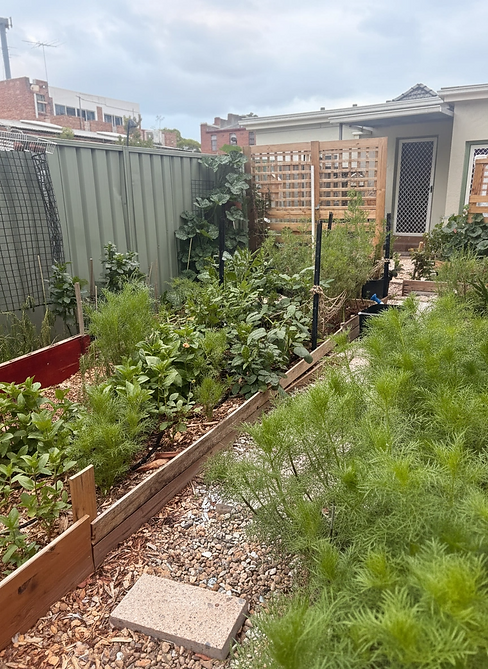
A working garden, not a show garden. This space is where I test ideas, learn what thrives, and shape the way I design for others. Built from reclaimed materials and grown through trial and care, it reflects how I believe gardens should work — practical, adaptable, and deeply personal.
I grew up on a sugar cane farm in Queensland, surrounded by animals, homemade pikelets, and my grandmother’s garden.
From early on, I learned how grounding it can be to work with your hands, to observe growth, and to care for something living.
Over time, that connection became something more essential. During periods of challenge, working with plants and soil gave me a sense of stability, purpose, and calm.
It taught me how to slow down, to work with what’s in front of me, and to let things unfold in their own time.
Through my work across different spaces, I’ve developed a strong understanding of people — how to meet them where they are, and how to create environments that feel steady, considered, and supportive.
That’s what shapes how I work now.
Whether I’m in a garden, creating something by hand, or working alongside someone, the approach is the same — pay attention, take your time, and create something that actually feels right.
I don’t separate the work into categories.
It’s all connected.
This is my own working garden — designed entirely around how I live and use the space.
What began as bare ground has become a productive, evolving garden shaped by daily life, changing needs, and constant learning.
It supports birds, bees, butterflies, frogs, and a whole range of beneficial life. I work using regenerative principles on a small scale — no pesticides, herbicides, or synthetic fertilisers, and composting everything I can to build healthy, living soil.
The garden is a mix of food crops, cut flowers, and experimental planting, built using reclaimed materials and adapted over time as needs shift. Nothing here exists purely for appearance — every part has a purpose.
This is where I test ideas, observe what actually works, and understand how spaces respond to real use.
It’s also where I refine the way I work with others — designing gardens around the people who use them, not around trends or rigid rules.
It’s hard to believe this garden is only a few months old, with most of what you see grown from seed.

You can take the girl out of the farm, but you'll never take the farm out of the girl.


